Save now with limited-time specials on oil changes, alignments, coolant service and more. View all Specials
Blogs
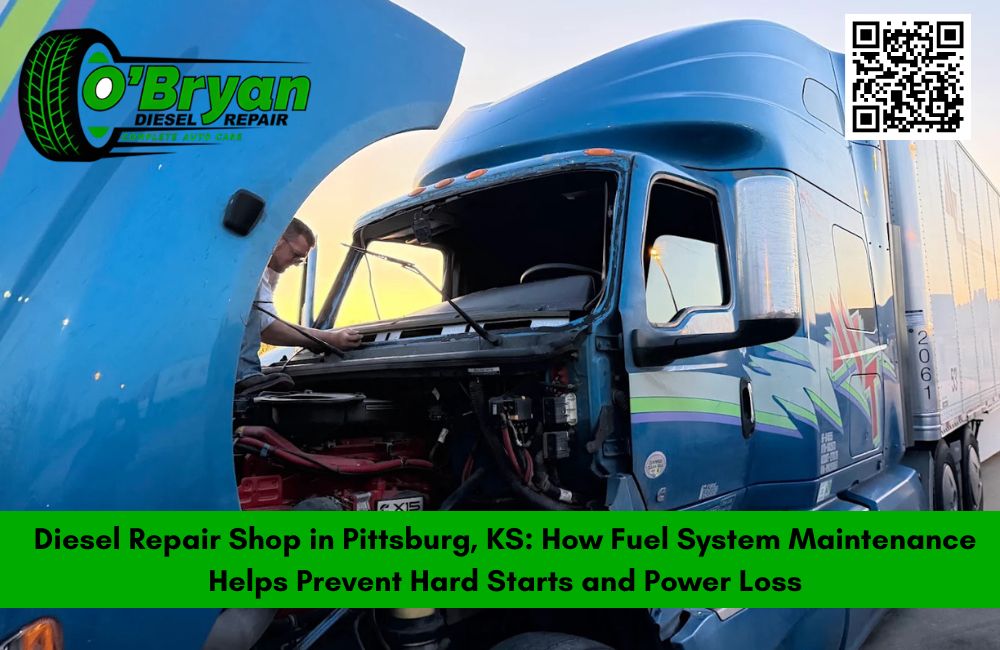
Diesel Repair Shop in Pittsburg, KS: How Fuel System Maintenance Helps Prevent Hard Starts and Power Loss
Hard starting, hesitation, rough idling, and loss of power often point to fuel delivery problems that should not be ignored. Working with a dependable Diesel Repair Shop in Pittsburg, KS, can help drivers and fleet managers catch fuel system issues before they lead to missed routes, poor fuel economy, injector damage, or roadside downtime. Routine fuel system maintenance keeps diesel engines supplied with clean fuel at the correct pressure, helping commercial trucks start more reliably and perform better under load.
Why Fuel System Maintenance Matters
Modern diesel engines depend on precise fuel delivery. If fuel is contaminated, restricted, aerated, or delivered at the wrong pressure, engine performance can quickly decline.
A properly maintained fuel system helps support:
Reliable starting
Consistent engine power
Better throttle response
Cleaner combustion
Improved fuel efficiency
Longer injector life
Reduced emissions problems
Fewer unexpected breakdowns
For owner-operators and fleets, keeping the fuel system healthy can also reduce the risk of expensive repairs caused by neglected filters, contaminated fuel, or failing components.
What Happens When Diesel Fuel Delivery Is Restricted?
A diesel engine may still run with a developing fuel restriction, but symptoms often become more noticeable as engine demand increases.
The Truck May Start Hard
A weak fuel supply can make cold starts or first starts of the day more difficult. Drivers may notice extended cranking or multiple attempts before the engine runs normally.
Power May Drop Under Load
A truck may feel acceptable while idling but struggle while accelerating, climbing a grade, or pulling a loaded trailer.
This happens because the engine needs more fuel under load. A restricted filter or weak supply system may not keep up with demand.
Fuel Economy Can Decline
Poor fuel delivery can affect combustion efficiency. Drivers may notice the truck using more fuel even when route conditions have not changed.
Prompt Truck repair can help prevent these symptoms from becoming more severe.
Common Causes of Diesel Fuel System Problems
Several issues can interfere with fuel delivery.
Clogged Fuel Filters
Fuel filters capture dirt, rust, water, and other contaminants before they reach sensitive injection components.
As filters become restricted, they can reduce fuel flow.
Warning signs may include:
Hard starting
Loss of power
Hesitation
Poor acceleration
Rough running
Replacing filters at recommended intervals is one of the simplest ways to protect the fuel system.
Contaminated Diesel Fuel
Water, dirt, microbial growth, or improper storage can affect fuel quality.
Contamination may damage:
Injectors
Pumps
Filters
Sensors
Fuel rails
A professional Truck Repair Shop can inspect fuel condition when contamination is suspected.
Weak Fuel Pump Performance
A failing lift pump or other fuel delivery component may provide enough fuel at idle but struggle under heavy engine demand.
Testing fuel pressure helps technicians determine whether the pump is performing correctly.
Why Water in Diesel Fuel Is a Serious Problem
Water contamination can create several issues inside a diesel fuel system.
Corrosion
Water can corrode metal components and damage precision surfaces inside pumps and injectors.
Poor Combustion
Water does not burn like diesel fuel, which can cause hesitation, rough running, or engine misfires.
Injector Damage
Modern injectors operate under extremely high pressure and very tight tolerances. Contaminated fuel can shorten their service life.
Drivers should drain water separators and follow manufacturer maintenance guidance rather than waiting for performance symptoms to appear.
How Fuel Filters Protect the Engine
Fuel filters are inexpensive compared with injection pumps and injectors.
Their job is to remove contamination before it reaches critical components.
Primary Fuel Filters
These filters often capture larger particles and may include water-separation capabilities.
Secondary Fuel Filters
Secondary filtration provides finer protection before fuel reaches high-pressure components.
Why Filter Intervals Matter
Waiting too long between filter changes can increase restriction.
For fleets searching for Truck Repair Near Me, scheduled filter service can be an effective way to reduce fuel-related breakdowns.
Fuel Injector Problems Drivers Should Know
Injectors control how much fuel enters each cylinder and how it is atomized.
When injectors become worn, clogged, or damaged, drivers may notice:
Rough idle
Engine knock
Excessive smoke
Poor fuel economy
Hard starting
Uneven power
Misfires
Increased emissions
Why Injector Problems Should Be Diagnosed
Replacing injectors without testing can be expensive.
A technician may evaluate:
Injector balance
Fuel pressure
Return flow
Electronic control signals
Combustion behavior
Accurate diagnostics help determine whether the issue is truly the injector or another part of the fuel system.
Hard Starting: What the Fuel System May Be Telling You
Hard starting can have several causes, including batteries, starters, sensors, and compression problems.
Fuel-related causes may include:
Air entering the fuel system
Weak fuel pump
Clogged filters
Injector leakage
Low fuel pressure
Contaminated fuel
Air in the Fuel System
Loose connections, damaged seals, or leaking lines can allow air to enter.
Air pockets interrupt fuel delivery and may cause extended cranking.
A Truck Repair Shop Near Me can inspect lines, fittings, filters, and seals for leaks that may not be immediately visible.
Why Trucks Lose Power Under Load
Power loss under load is one of the most common signs of fuel delivery trouble.
Higher Demand Reveals Weakness
During acceleration or heavy hauling, fuel demand increases.
A restricted or failing system may not be able to maintain the required flow or pressure.
Symptoms May Include
Slow acceleration
Difficulty climbing hills
Engine hesitation
Reduced top speed
Warning lights
Excessive smoke
Poor throttle response
These symptoms can also be caused by turbo, airflow, emissions, or transmission problems, which is why testing is important.
How Technicians Diagnose Fuel System Problems
Professional diagnosis typically involves several steps.
Fuel Pressure Testing
Testing confirms whether the system is supplying fuel at the correct pressure.
Filter Inspection
Technicians may inspect filter condition for:
Dirt
Water
Rust
Microbial contamination
Electronic Diagnostics
Scan tools can reveal:
Fuel pressure codes
Injector faults
Sensor problems
Fuel trim concerns
Rail-pressure irregularities
Leak Inspection
Fuel lines, fittings, pumps, and connections should be checked for external leaks and air intrusion.
A qualified Diesel Repair Near Me provider should use multiple diagnostic methods rather than relying on a single fault code.
When Roadside Fuel System Service May Help
Some fuel-related problems can be addressed where the truck is located.
Professional Mobile Truck Repair may help with:
Fuel filter replacement
Basic fuel-pressure checks
Air-in-fuel concerns
Minor fuel line repairs
Diagnostic scanning
Fuel delivery inspection
No-start diagnosis
If the problem involves high-pressure pumps, injectors, internal contamination, or major fuel-system damage, in-shop service may be necessary.
When the Truck Should Go to a Repair Facility
A shop is usually the better option for:
Injector replacement
High-pressure fuel pump repair
Fuel tank cleaning
Severe contamination
Advanced pressure testing
Internal engine diagnosis
Complex electrical fuel-system faults
Controlled shop conditions allow technicians to perform more extensive tests and repairs safely.
How Preventative Maintenance Reduces Fuel System Failures
Fleet managers can reduce fuel-related downtime by building a consistent maintenance plan.
Replace Filters on Schedule
Follow manufacturer service intervals and adjust for severe-duty use when appropriate.
Buy Fuel From Reliable Sources
Consistent fuel quality helps protect injection components.
Monitor Water Separators
Drain and inspect separators according to maintenance guidance.
Record Fuel-Related Repairs
Track:
Filter changes
Injector repairs
Fuel pump service
Contamination incidents
Hard-start complaints
Pressure test results
Maintenance history can help technicians identify recurring issues.
How Seasonal Conditions Affect Diesel Fuel Systems
Fuel system performance can change with weather.
Cold Weather
Low temperatures can increase starting difficulty and may expose weak batteries or fuel delivery issues.
Drivers should also be aware of fuel gelling risks in appropriate conditions.
Hot Weather
High temperatures can stress pumps and electrical components and may worsen existing fuel-system problems.
Seasonal inspections help identify issues before extreme conditions expose them.
Why Local Diesel Service Matters in Pittsburg, KS
Commercial trucks operating in Pittsburg and Southeast Kansas may support regional freight, agriculture, construction, delivery routes, and other demanding work.
Local service provides practical advantages such as:
Easier scheduling
Faster follow-up
Familiarity with regional operating conditions
Roadside support
Consistent maintenance records
A local provider can also become familiar with recurring fleet issues over time.
Questions Drivers Should Ask About Fuel System Service
Drivers and fleet managers should understand what was tested and why.
Was Fuel Pressure Tested?
Pressure testing can help confirm whether delivery is adequate.
Were the Filters Restricted?
The technician should explain whether filter condition contributed to the symptoms.
Is Fuel Contaminated?
If contamination is present, the source and extent should be identified.
Are the Injectors Performing Correctly?
Injector diagnosis should be based on testing rather than assumption.
Can the Truck Return to Service Safely?
The repair provider should explain whether additional work is needed before regular operation.
Frequently Asked Questions
Can a clogged fuel filter cause hard starting?
Yes. Restricted fuel flow can reduce pressure and make startup more difficult.
Can bad diesel fuel cause power loss?
Yes. Contaminated fuel can restrict filters, damage injectors, and interfere with combustion.
How often should diesel fuel filters be replaced?
Intervals vary by engine, mileage, fuel quality, operating conditions, and manufacturer recommendations.
Can injector problems increase fuel consumption?
Yes. Poor injector performance can affect combustion efficiency and fuel economy.
Should drivers keep operating with repeated power loss?
No. Repeated loss of power should be diagnosed because continued operation may damage components or lead to a breakdown.
Protect Fuel Delivery Before Performance Drops
Hard starts and loss of power are often early warnings that a diesel fuel system is not operating correctly. Routine filter replacement, fuel-quality monitoring, accurate diagnostics, and timely repairs can help prevent expensive injection-system damage and reduce roadside downtime.
O'Bryan Diesel Repair provides fuel-system diagnostics, engine service, preventative maintenance, roadside assistance, and commercial diesel repairs in Pittsburg, KS. If your truck is taking longer to start, hesitating, or losing power under load, schedule an inspection before the problem becomes a route-ending failure.
O'Bryan Diesel Repair
2501 N Broadway St Pittsburg, KS 66762
+1 (620) 670-1185

Our Service Area
Call for Repair in Pittsburg, KS
Need dependable auto repair in Pittsburg, KS from a team that values honest service and quality workmanship? Contact O'Bryan Auto & Diesel Repair at +1 620-670-1185 to schedule service, ask questions, or get the help you need for your next car repair or car maintenance visit.