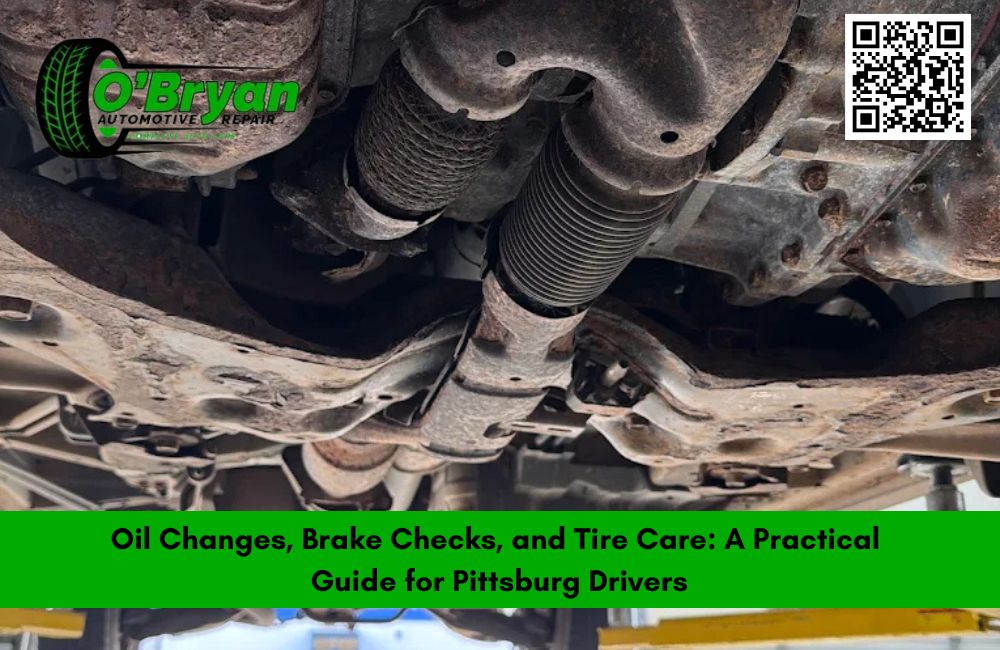
Oil Changes, Brake Checks, and Tire Care: A Practical Guide for Pittsburg Drivers
Routine vehicle care does not need to be complicated. A timely Oil Change, regular brake inspections, and consistent tire care can help Pittsburg, Kansas, drivers reduce unexpected repairs, improve road safety, and extend the useful life of their vehicles. These basic services work together to protect engine performance, stopping ability, handling, and fuel efficiency.
At O’Bryan Auto Repair & Tires, local drivers can receive practical maintenance support, professional diagnostics, tire service, and mechanical repairs for domestic, Asian, European, diesel, and electric vehicles.
Guide to Essential Vehicle Maintenance
Three of the most important maintenance priorities are:
Change the engine oil according to the manufacturer’s schedule.
Inspect the brake system when performance changes or at regular service intervals.
Rotate and inspect tires to encourage even wear and dependable traction.
Keeping up with these services can help prevent larger mechanical problems and make everyday driving more predictable.
Why Regular Oil Service Matters
Engine oil reduces friction, controls heat, and carries contaminants away from moving engine parts. Over time, oil becomes dirty and loses some of its protective qualities.
What Happens When Oil Service Is Delayed?
Driving too long with old, low, or contaminated oil may contribute to:
Increased engine friction
Excessive heat
Sludge buildup
Reduced fuel efficiency
Accelerated component wear
Serious internal engine damage
The correct interval depends on the vehicle’s make, model, engine, mileage, oil type, and driving conditions. Frequent short trips, extended idling, towing, and temperature extremes may place additional strain on the oil.
Check More Than the Oil
A thorough maintenance visit may also include checking:
Oil level and condition
Oil filter
Coolant
Belts and hoses
Air filter
Battery condition
Fluid leaks
Dashboard warning lights
A reliable Auto Repair Shop should base recommendations on the vehicle’s actual condition and manufacturer guidance rather than a one-size-fits-all schedule.
Brake Checks Help Protect Every Trip
Brakes wear gradually, so drivers may adjust to reduced performance without realizing it. Routine inspections help identify worn components before stopping ability becomes seriously affected.
Signs Your Brakes Need Attention
Schedule an inspection when you notice:
Squealing or grinding
A soft or low brake pedal
Steering-wheel vibration while braking
Pulling to one side
Longer stopping distances
A brake warning light
A burning smell near a wheel
Drivers searching for Brake Repair Near Me should choose a shop that evaluates the entire braking system instead of replacing one part without inspection.
What a Brake Inspection Should Include
A professional inspection may cover:
Brake pads
Rotors
Calipers
Brake fluid
Hoses and lines
Parking brake components
Electronic brake systems
Replacing worn pads early may help prevent rotor damage and reduce the total cost of service.
Tire Care Supports Safety and Efficiency
Tires are the vehicle’s only direct contact with the road. Their condition affects traction, braking, steering response, ride quality, and fuel economy.
Why Tire Rotation Is Important
Front and rear tires often wear at different rates. Regular rotation changes their position to promote more even tread wear.
A Tire Rotation Near Me service also gives technicians an opportunity to inspect tire pressure, tread depth, sidewalls, and irregular wear patterns.
Signs of Tire or Alignment Problems
Pay attention to:
Uneven tread wear
Frequent pressure loss
Vibration at highway speeds
Pulling left or right
Cracks or bulges
Reduced wet-road traction
A noisy or rough ride
Uneven wear may result from improper inflation, alignment concerns, wheel imbalance, or worn steering and suspension components. Rotating the tires will not solve an underlying mechanical issue, so inspection matters.
How Oil, Brakes, and Tires Work Together
Oil service protects the engine, brake care protects stopping performance, and tire maintenance supports traction and control. Neglecting one area can place additional stress on the others.
For example:
Worn tires can increase stopping distance.
Poor alignment can shorten tire life.
Brake problems can cause pulling or uneven wear.
Low engine oil can reduce performance or lead to failure.
Underinflated tires can increase fuel consumption.
A complete Car Maintenance plan considers the whole vehicle rather than treating each service as an isolated task.
A Practical Maintenance Schedule for Pittsburg Drivers
Every vehicle has different requirements, but drivers can use the following framework as a starting point.
Monthly Checks
Inspect:
Tire pressure
Visible tire damage
Fluid leaks
Dashboard warning lights
Exterior lights
Windshield washer fluid
At Routine Service Visits
Ask for checks of:
Engine oil and filter
Tire tread and wear
Brake condition
Battery performance
Coolant
Belts and hoses
Air filters
Steering and suspension
Before Long Trips
Before traveling outside Pittsburg or taking a long highway trip, consider checking:
Oil level
Tire pressure
Brake performance
Battery condition
Coolant level
Spare tire or mobility kit
Preventive checks can reduce the chance of an avoidable roadside problem.
When Vehicle Symptoms Require Diagnostic Testing
Maintenance helps prevent problems, but unusual symptoms should still be diagnosed promptly.
Visit a professional Car Repair Shop if you notice:
A check-engine light
Fluid leaks
Rough idling
Hard starting
Reduced acceleration
Overheating
Unusual sounds
Shifting concerns
Steering changes
Searching for Auto Repair Near Me is often the first step after a warning light or sudden symptom appears. Look for a provider that uses inspection and diagnostic testing before recommending repairs.
Vehicle Care for Different Makes and Models
Maintenance procedures can vary between domestic, Asian, European, diesel, luxury, and electric vehicles.
O’Bryan Auto Repair & Tires services brands such as:
Ford, Chevrolet, GMC, Ram, Jeep, and Cadillac
Toyota, Honda, Nissan, Subaru, Hyundai, and Kia
BMW, Mercedes-Benz, Audi, Volkswagen, and Volvo
Tesla, Lucid, and Rivian
Working with a shop experienced in different vehicle platforms can help ensure the correct fluids, service intervals, parts, and diagnostic procedures are used.
What to Check After a Pothole or Minor Impact
Pittsburg drivers may encounter potholes, road debris, curb impacts, or minor collisions that affect more than the visible exterior.
After an impact, inspect the vehicle for:
Pulling or drifting
New vibration
Tire damage
Warning lights
Fluid leaks
Changes in braking
Unusual steering response
An Auto Body Shop or Body Shop may address visible panel and paint damage, while mechanical technicians evaluate tires, alignment, suspension, steering, and brakes.
Following Collision Repair, drivers should confirm that the vehicle tracks straight, stops normally, and does not develop uneven tire wear. A Collision Repair Shop may focus on structural and cosmetic work, but a mechanical inspection can help identify drivability concerns.
How to Choose a Reliable Local Repair Provider
A trustworthy repair business should make vehicle care easier to understand.
Look for:
Clear explanations
Accurate diagnostics
Experience with your vehicle type
Practical recommendations
Transparent communication
Respect for your schedule
Consistent workmanship
Professional Auto Repair should focus on identifying the cause of a problem and helping the customer make an informed decision.
Frequently Asked Questions
How often should engine oil be changed?
Follow the interval listed in the owner’s manual. The correct schedule depends on oil type, mileage, engine design, and driving conditions.
How do I know whether my brakes need inspection?
Schedule service if you hear grinding or squealing, feel vibration, notice a soft pedal, or experience longer stopping distances.
How often should tires be rotated?
Many vehicles benefit from rotation every 5,000 to 8,000 miles, but the manufacturer’s recommendation should be followed.
Can tire rotation fix uneven wear?
Rotation can slow future uneven wear, but it will not correct alignment, suspension, or inflation problems that caused the wear.
Is routine maintenance less expensive than major repairs?
In many cases, yes. Timely inspections and fluid services can identify smaller problems before they damage more expensive components.
Schedule Essential Vehicle Care in Pittsburg, KS
Oil service, brake inspections, and tire care are simple steps that can make a meaningful difference in vehicle safety and reliability. Staying proactive can also help drivers avoid larger repair bills and inconvenient breakdowns.
Contact O’Bryan Auto Repair & Tires to schedule maintenance, tire service, brake checks, diagnostics, engine work, transmission service, or help with an unexpected vehicle concern.
O’Bryan Auto Repair & Tires
2501 N Broadway St
Pittsburg, KS 66762, United States
Phone: +1 (620) 670-1185
